
Grand reopening, now taking pre-orders: 20% off everything until Wednesday 4 November, 17:00
Order now and secure your cuts. The first orders ship on Wednesday 4 November with SEUR Frío (refrigerated courier) and arrive the next day (Balearic Islands: two days).
On orders over €129: free delivery and a free tray of 4 criollo sausages.
UK · US · Spain · the reference guide
Beef cuts in Spanish: the UK and US names translated for the Spanish butcher’s counter
Spanish butchers break the carcass down differently: they follow the seams between the muscles, much as the French do, so some British joints have an exact twin here and some do not. The short version: fillet (US tenderloin) is solomillo, ribeye is lomo alto, UK sirloin (US striploin) is lomo bajo, rump is cadera, brisket is pecho and mince (US ground beef) is carne picada. The full table follows, then the traps, then the cuts we deliver chilled.
See the cuts we deliver How delivery works
- Vacuum-packed and chilled: order by Wednesday 17:00, delivered Thursday before 13:00 on the Spanish mainland
- Retinto beef from the province of Cádiz, sold as yearling, mature cow and ox
- Write to us in English on WhatsApp: +34 695 34 63 29
The quick answer
Read across: the name you know, the American name, and the word to say at a Spanish counter. Where a cut has its own page, the Spanish name is a link to it.
| UK | US | Ask for in Spain |
|---|---|---|
| Fillet | Tenderloin, filet mignon | solomillo |
| Ribeye; rib of beef or fore rib (bone-in) | Ribeye; prime rib (bone-in) | lomo alto; as a boneless steak: entrecot; bone-in: chuletón |
| Sirloin | Striploin, New York strip | lomo bajo (a boneless steak from it is also sold as entrecot) |
| Rump | Sirloin, top sirloin | cadera |
| Rump cap | Picanha, coulotte | picaña or tapilla (to keep the fat cap, say “con su grasa”) |
| No common UK name | Tri-tip | rabillo de cadera |
| T-bone, porterhouse | T-bone, porterhouse | T-bone, or chuletón de lomo bajo con solomillo |
| Tomahawk | Tomahawk | tomahawk (a chuletón from the lomo alto with the long rib bone left on) |
| Topside | Top round | tapa |
| Silverside | Bottom round | contra |
| Salmon cut (part of the silverside) | Eye of round | redondo |
| Thick flank, top rump | Knuckle, sirloin tip | babilla |
| Skirt | Skirt (outside skirt) | entraña |
| Onglet | Hanger steak | ask for onglet or solomillo de pulmón; names vary a lot and many counters do not separate it |
| Bavette, flank | Flank steak | vacío (the grill name; it is part of the falda) |
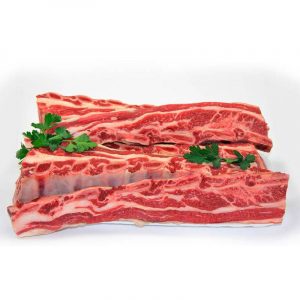
| Short ribs (Jacob’s ladder) | Short ribs | costilla de ternera; cut across the bones in strips: tira de asado or churrasco |
| Brisket | Brisket | pecho (some shops label it aleta; say both) |
| Chuck, braising steak | Chuck | aguja |
| Feather blade | Flat iron | llana (part of the espaldilla) |
| Shin | Shank | morcillo or jarrete (front leg: brazuelo); sliced across the bone: ossobuco |
| Ox cheek | Beef cheek | carrillada or carrillera |
| Oxtail | Oxtail | rabo de toro or rabo de vacuno |
| Diced or stewing beef | Stew beef | carne para guisar, “en tacos” |
| Mince | Ground beef | carne picada (half beef, half pork: “mitad ternera, mitad cerdo”) |
| Marrow bone | Marrow bone | hueso de caña or tuétano |
Several rows give two Spanish words on purpose. Names shift from one shop to the next, so say both and let the butcher pick the one he uses.
The traps
Most mistakes at a Spanish counter come from six words that look familiar and are not.
Sirloin means two different cuts
A British sirloin is what Americans call striploin or New York strip, and in Spain it is lomo bajo. An American “sirloin” is British rump, and in Spain that is cadera. An American recipe asking for sirloin wants cadera. The sirloin page covers the steak itself.
Entrecot can be ribeye or sirloin
In Spain entrecot is simply a boneless steak from the loin. It can come from the rib end, the lomo alto, which makes it a ribeye, or from the sirloin end, the lomo bajo. If it matters to you, ask which, with phrase 9 in the list further down.
Ternera is not veal
The dictionary says ternera is veal. The counter says otherwise. In law, ternera is an animal of 8 to 12 months, but most Spanish shops use the word loosely for añojo, yearling beef of 12 to 24 months: mild, tender, pale red, and beef by any British standard. White veal is ternera blanca, up to 8 months. This is why “costilla de ternera” and “pecho de ternera” in the table above are beef cuts.
Filete is not fillet
A filete is a thin frying steak. Ask for “un filete de ternera” expecting a fillet steak and you will go home with a thin slice for the pan. Fillet is solomillo, always. We sell filetes too, from retinto yearling in 1 kg packs, but they are a different dinner.
A chuletón is not a chuleta
A chuleta is a chop, a plate for one. The ending -ón makes a Spanish word bigger, and a chuletón is exactly that: a thick bone-in rib steak, usually 1 kg or more, from a mature animal and meant for sharing. Ours from retinto mature cow weighs approx. 1 kg and is listed at €57.90 (September 2026). A tomahawk is a chuletón from the lomo alto with the long rib bone left on.
Brisket has two names
Brisket is pecho, but some shops label the same piece aleta. Say both.
How old is the animal?
Spanish beef is labelled by the age and sex of the animal, and the names are fixed in law (Royal Decree 1698/2003). They tell you more about flavour than the name of the cut does.
| Name on the label | Animal | Age |
|---|---|---|
| ternera blanca | white veal | up to 8 months |
| ternera | calf | 8 to 12 months |
| añojo | yearling beef | 12 to 24 months |
| novillo, novilla | young male, young female | 24 to 48 months |
| cebón | castrated male | under 48 months |
| buey | ox, a castrated male | over 48 months |
| vaca | mature cow | over 48 months |
| toro | bull | over 48 months |
Three of these matter when you shop. Añojo is mild, tender and pale red, and it is what most shops mean by ternera. Vaca, often sold as vaca vieja (old cow beef), is darker, carries yellow fat and has a deep flavour; it is the meat behind the famous Spanish chuletón. Buey is genuine ox, rare and expensive.
Our beef is retinto, a native breed of south-west Spain (Andalusia and Extremadura) with a deep red coat, raised outdoors on the dehesa, the open oak pastureland. Ours comes from the province of Cádiz and we sell it at all three ages. At any counter the useful question is “¿es añojo o vaca?”.
What you will not find (and the nearest thing)
Brisket
We do not sell brisket yet. Ask any counter for “pecho de ternera, la pieza entera, sin cortar” (beef brisket, the whole piece, uncut), and add “o aleta” if the first word gets a blank look. If it is going in a smoker, say you want it “con su grasa”, with its fat, so that nobody trims it for you. For long, slow cooking we do sell short ribs and ox cheek.
Gammon
There is no Spanish equivalent. Gammon is cured, uncooked leg; jamón cocido is cooked ham and jamón serrano is dry-cured ham, and neither will do the job. We do not sell it. If the gammon was meant for a big family table, the closest things we sell are a 1.6 kg leg of lamb or a whole beef roasting joint; the Christmas page has the dates.
British bacon and sausages
We do not sell bacon joints, British sausages or black pudding. The sausage we do sell is chorizo criollo, a fresh grilling sausage for the barbecue, on its own or in the barbecue boxes; if you have a food allergy, ask us for the ingredient and allergen list on WhatsApp before ordering.
Mince
Mince is carne picada. For the half-and-half mix ask for “mitad ternera, mitad cerdo”. Avoid supermarket trays labelled preparado de carne or burger meat: they are not plain mince, they contain sulphites and cereal. We do not sell mince; what we do sell for the same sort of cooking is diced retinto yearling stewing beef in 1 kg packs.
Flat iron
You will not see “flat iron” on a Spanish label. The cut is llana, part of the espaldilla, so ask for it by that name. We do not sell it; our quick-grilling steaks are skirt and flank.
Hanger steak
Ask for onglet or solomillo de pulmón: names vary a lot and many counters do not separate it at all. We do not sell it either. The nearest thing on our list is skirt, entraña, sold as a 1.5 kg piece.
Pork and lamb in one minute
Pork and lamb are easier than beef, with one exception: the fresh cuts of the ibérico pig keep their Spanish names everywhere.
| You want | Ask for | Worth knowing |
|---|---|---|
| Pork belly | panceta | Say “en una pieza” if you want it whole |
| Pork shoulder | paleta de cerdo | The collar end is sold as aguja |
| Pork fillet (US tenderloin) | solomillo de cerdo | Same word as beef fillet, so name the animal |
| Pork cheeks | carrilladas | A braising cut, like ox cheek |
| Ibérico: secreto | secreto | Thin, heavily marbled, hidden between the shoulder and the belly fat |
| Ibérico: presa | presa | The oval shoulder-end muscle above the loin, two per pig |
| Ibérico: pluma | pluma | Small triangular cut at the front end of the loin |
| Ibérico: abanico | abanico | The fan-shaped layer covering the ribs |
| Leg of lamb | pierna | Cordero is lamb; lechal is milk-fed lamb, with very small joints |
| Shoulder of lamb | paletilla | Not paleta, which is the pork word |
| Rack of lamb | carré or chuletero | Say “entero” to keep it in one piece |
| Lamb cutlets | chuletillas | Small, for the grill |
| Lamb shank | jarrete | The same word as beef shin |
Ibérico pork may be served pink, and de bellota on a label means the pig was finished on acorns in the dehesa. The full run is on the ibérico pork page and the lamb page.
Twelve phrases for the counter
Short phrases do the work at a Spanish counter; add “por favor” and you are fine.
| # | Say | It means |
|---|---|---|
| 1 | Un kilo de…, por favor | A kilo of…, please (“medio kilo” is half a kilo) |
| 2 | En una pieza, sin cortar | In one piece, uncut |
| 3 | Cortado grueso, de dos dedos | Cut thick, two fingers deep |
| 4 | En filetes finos | In thin slices |
| 5 | Para guisar, en tacos | For stewing, diced |
| 6 | Para la barbacoa | For the barbecue |
| 7 | Con su grasa | With its fat left on |
| 8 | Sin hueso / con hueso | Boneless / on the bone |
| 9 | ¿De qué parte es este entrecot, lomo alto o lomo bajo? | Which part is this entrecot from, the rib end or the sirloin end? |
| 10 | ¿Es añojo o vaca? | Is it yearling beef or mature cow? |
| 11 | ¿Cuánto tiempo tiene de maduración? | How long has it been aged? |
| 12 | ¿Me lo envasa al vacío? | Could you vacuum-pack it for me? |
The cuts we deliver
These are the cuts from this guide that we send vacuum-packed and chilled. The cards show live prices and lead to the basket, which is in Spanish; the delivery page walks you through it in English. The shop reopens on Thursday 5 November 2026, and pre-orders placed by 4 November carry 20% off in the basket and arrive on the 5th.
For the grill
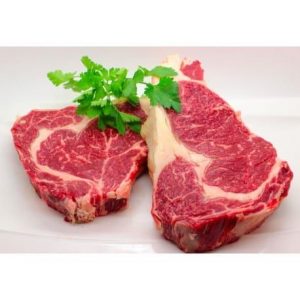
Chuletón (bone-in rib steak), retinto cow, approx. 1 kg
Chuletón Vaca Retinta - MAS VENDIDO57,90€ VAT incl.Add to basket2 retinto cow entrecôte steaks, 650 g
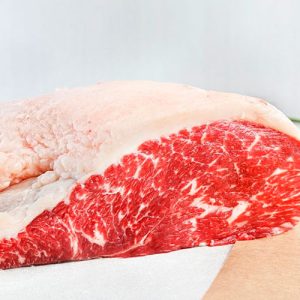
2 Entrecot Vaca Retinta 650 gr (Más vendido)30,90€ VAT incl.Add to basketWhole picanha (rump cap), 100% retinto, 1.5–2 kg
Picanha 100% Retinto, pieza completa 1,5 a 2 kg59,90€ VAT incl.Add to basketSkirt steak (entraña), retinto yearling beef, 1.5 kg
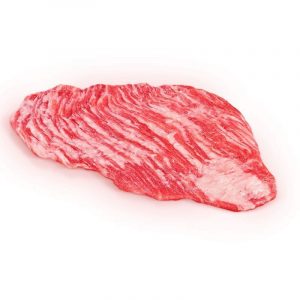
Entraña Añojo Retinto 1,5 KG29,90€ VAT incl.Add to basket



Fillet, the braising pot, pork, lamb and a box
Whole fillet (tenderloin), retinto yearling beef
Solomillo de añojo retinto Price range: 47,90€ through 50,50€ VAT incl.Choose weightOx cheek (carrillada), retinto yearling beef, frozen
Carrillada de añojo29,04€ VAT incl.Add to basketSecreto ibérico de bellota, 800 g
SECRETO DE CERDO IBÉRICO DE BELLOTA 800 gr34,90€ VAT incl.Add to basketGourmet BBQ box: the grill master’s selection (approx. 5.5 kg)
Kit Barbacoa Gourmet · Selección del Maestro Parrillero149,00€ VAT incl.Contains processed meat: ask us for the allergen listView product



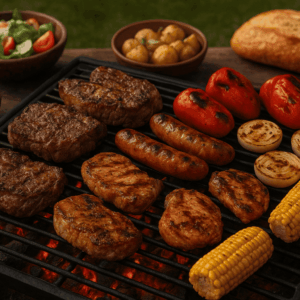
Our whole roasting joints are large, from approx. 2.5 kg for a redondo to approx. 7.5 kg for a contra, so plan to portion and freeze.
Questions people ask
What is ribeye in Spanish?
The cut is lomo alto. As a boneless steak it is sold as entrecot, and on the bone, cut thick, it is a chuletón. Entrecot can also come from the lomo bajo, so ask for “entrecot de lomo alto” to be sure of a ribeye.
What is sirloin steak in Spanish?
British sirloin (US striploin or New York strip) is lomo bajo, and a steak cut from it is usually labelled entrecot. American “sirloin” is a different cut, British rump, and in Spain that is cadera.
What is fillet steak in Spanish?
Solomillo, for beef and for pork, so say “solomillo de ternera” or “solomillo de vaca” for beef. Do not ask for filete, which is a thin frying steak. We sell whole fillets, described on the fillet page.
Is ternera veal?
Not in the British sense. Legally ternera is an animal of 8 to 12 months, and most Spanish shops use the word loosely for añojo, yearling beef of 12 to 24 months, which is mild and pale red but beef all the same. White veal is ternera blanca, up to 8 months.
Can I get brisket in Spain?
Yes, but you have to ask for it. The cut is pecho, and some shops label it aleta, so say both and ask for “la pieza entera, sin cortar”. For smoking, add “con su grasa” to keep the fat on. We do not sell brisket yet; for slow cooking we have short ribs and ox cheek.
What is mince in Spanish?
Carne picada. For a half beef, half pork mix say “mitad ternera, mitad cerdo”. Trays labelled preparado de carne or burger meat are not plain mince: they contain sulphites and cereal.