
Grand reopening, now taking pre-orders: 20% off everything until Wednesday 4 November, 17:00
Order now and secure your cuts. The first orders ship on Wednesday 4 November with SEUR Frío (refrigerated courier) and arrive the next day (Balearic Islands: two days).
On orders over €129: free delivery and a free tray of 4 criollo sausages.
Vaca vieja · Old cow beef · Mature cow over 48 months · Retinto
Vaca Vieja: Why Spain Prizes Old Cow Beef, and Every Cut We Sell From It
If the phrase “old cow” on a menu made you hesitate, you are not alone, and here is what it actually means. Vaca vieja means “old cow”: beef from a female over 48 months, the legal category vaca in Spain. The meat is darker than the young beef sold in Britain, the fat is yellow and the flavour is deeper. It is what Spanish and Basque grill houses serve as their best steak. We sell it from retinto cow, from a steak for two up to a whole loin.
See the mature cow cuts About retinto beef
- Retinto mature cow from the province of Cádiz, raised outdoors
- Eight cuts, from two entrecôte steaks to a whole loin
- Vacuum-packed, delivered chilled on Thursday before 13:00 on the Spanish mainland
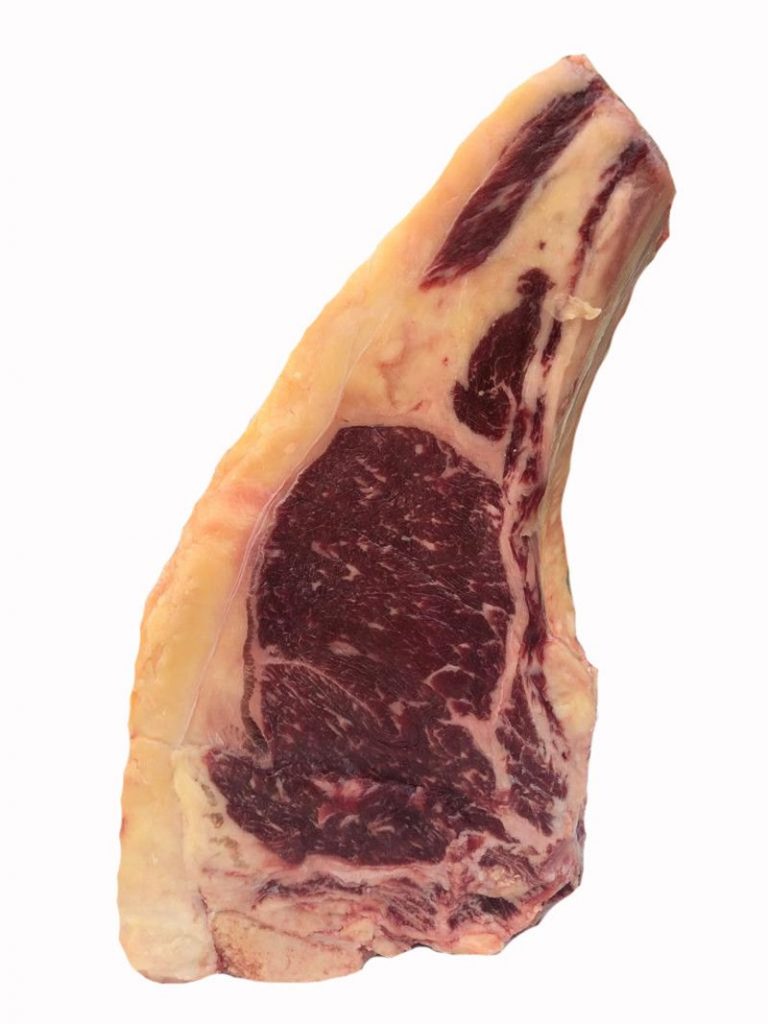
Old cow steaks, on the bone and off it
The best seller is the mature cow chuletón of approx. 1 kg, listed at €63.90. The two entrecôte steaks, 650 g in all, are the boneless way in at €34.90. The T-bone is sold by weight, and there are two tomahawks, of approx. 1 kg and approx. 1.7 kg. The shop reopens on Thursday 5 November 2026; until 4 November, pre-orders carry 20% off in the basket.
Chuletón (bone-in rib steak), retinto cow, approx. 1 kg
Chuletón de vaca retinta, 1 kg aprox.63,90€ VAT incl.Add to basket2 retinto cow entrecôte steaks, 650 g
2 entrecots de vaca retinta, 650 g34,90€ VAT incl.Add to basketT-bone steak, retinto cow
T-Bone Vaca Retinta Price range: 42,90€ through 49,90€ VAT incl.Choose weightTomahawk steak, retinto cow, approx. 1 kg
Tomahawk de vaca retinta, 1 kg aprox.46,90€ VAT incl.Add to basketTomahawk steak, retinto cow, approx. 1.7 kg
Tomahawk Vaca Retinta 1,7 Kg aprox.79,90€ VAT incl.Add to basket

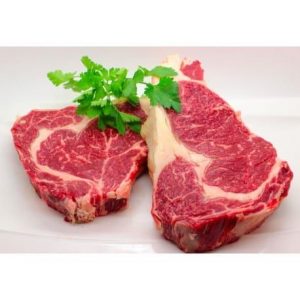


Whole pieces from the same animal
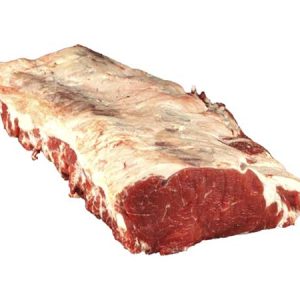
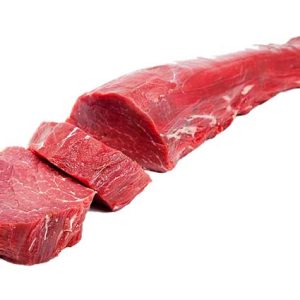
For people who cut their own steaks: the whole bone-in loin and the loin aged 30+ days (without the fillet), both sold by weight, and the whole fillet (US: tenderloin) of approx. 2.3 kg.
Whole bone-in loin, retinto cow
Lomo de vaca retinta Price range: 52,90€ through 59,41€ VAT incl.Choose weightRetinto cow loin, dry-aged 30+ days (without fillet)
Lomo de vaca retinta madurado sin solomillo + 30 días Price range: 52,90€ through 54,90€ VAT incl.Choose weightWhole fillet (tenderloin), retinto cow, approx. 2.3 kg
Solomillo Vaca Retinta. 2.3 kg aprox. Price range: 142,90€ through 152,90€ VAT incl.Choose weight

The animal, not the cut
Britain and America eat young cattle and judge a steak mostly on tenderness. Spain does that too, with its everyday yearling beef, but it keeps a second tradition: the steak from an animal that has lived a long time. Under Spanish law (Royal Decree 1698/2003), vaca is a female over 48 months. In most beef countries a cow of that age is not thought of as steak. In Spain she is the point.
The Basque grill houses made the reputation. Their house steak is a thick cut from an old cow, grilled hard over charcoal and carried to the table rare, and the rest of Spain followed. The cut itself, the thick rib steak on the bone, is explained on our chuletón page.
What four years and more do to the meat
Three things change with age, and you can see two of them before you cook. The meat is darker, where yearling beef is pale red. The fat is yellow instead of white, which surprises people used to supermarket steak and is how mature cow should look. And the flavour is deeper, the kind that needs salt and nothing else. The trade is texture. Old cow has more bite than a young fillet steak, so it is cut thick, cooked rare to medium-rare and sliced across the grain.
“Galician-style” and “Basque-style”: a style, not our origin
Those names describe a way of eating: mature cow, thick-cut, grilled hot, served rare. They say nothing about where our cattle come from. Ours is retinto, the native red breed of south-west Spain, raised outdoors on the dehesa (open oak pastureland) in the province of Cádiz. The taste for this meat has travelled: in German online shops, Spanish old-cow chuletón sells for about €90–110 per kilo.
| Cut from retinto mature cow | Pack | Best for |
|---|---|---|
| Chuletón (bone-in rib steak) | Approx. 1 kg | The first old cow steak to try, shared |
| 2 entrecôte steaks | 650 g | Two people, a pan, no bone |
| T-bone steak | By weight | Sirloin and fillet on one bone |
| Tomahawk | Approx. 1 kg | A chuletón with the long rib bone left on |
| Tomahawk, large | Approx. 1.7 kg | A bigger table |
| Whole bone-in loin | By weight | Cutting your own steaks |
| Loin aged 30+ days, without fillet | By weight | Those who like old cow and want it aged as well |
| Whole fillet | Approx. 2.3 kg | The tender cut; portion it and freeze what you do not need |
How to cook mature cow
- Take the meat out of the fridge an hour ahead and dry the surface.
- Use the hottest barbecue (US: grill) or heaviest pan you have. Old cow wants a dark crust and a red centre.
- Aim for rare, 50–52 °C (122–126 °F) at the core, or medium-rare, 54–57 °C (129–135 °F). Past medium, 60–63 °C (140–145 °F), mature cow turns firm and dry.
- Rest it five to ten minutes on a warm board.
- Coarse salt, sliced across the grain, no sauce.

Old cow beef questions
Is old cow beef tough?
It is firmer than young beef, not tough, provided it is cut thick, cooked no further than medium-rare and sliced across the grain.
Why is the fat yellow?
Because the animal is mature. Yellow fat is normal on old cow beef.
Is this Galician beef?
No, and we say so on purpose. Our mature cow is retinto from the province of Cádiz. “Galician-style” describes a way of grilling old cow, not the origin of our meat.
Is vaca vieja the same as buey?
No, though they are often confused. Buey is ox, a castrated male over 48 months; vaca is a female of the same age. The difference is explained on our ox page.
I prefer milder beef. What should I buy?
Yearling beef, añojo, from an animal of 12–24 months: mild, tender and pale red. See yearling beef.