
Grand reopening, now taking pre-orders: 20% off everything until Wednesday 4 November, 17:00
Order now and secure your cuts. The first orders ship on Wednesday 4 November with SEUR Frío (refrigerated courier) and arrive the next day (Balearic Islands: two days).
On orders over €129: free delivery and a free tray of 4 criollo sausages.
Ternera · Añojo · Yearling beef · Not veal
Ternera in English: Why Spanish “Veal” Is Usually Yearling Beef (Añojo)
If you have been avoiding ternera because the dictionary told you it was veal, you have been missing most of the counter. The dictionary translates ternera as veal, but on most Spanish counters it means añojo: yearling beef, from an animal of 12–24 months. It is mild, tender and pale red, and it is beef, not veal. True white veal is ternera blanca, from a calf of up to 8 months. Most of the everyday cuts we sell are retinto yearling, from steaks to stewing beef.
See the yearling cuts All beef cuts in Spanish
- Retinto yearling from the province of Cádiz, raised outdoors
- Añojo: 12–24 months, as defined in Royal Decree 1698/2003
- Vacuum-packed, delivered chilled on Thursday before 13:00 on the Spanish mainland

Yearling beef for the grill and the pot
The yearling chuletón is a bone-in rib steak of approx. 1 kg, listed at €36.90, and the gentle way into Spain’s sharing steak. With it: the whole yearling fillet (US: tenderloin), sold by weight; a 1.5 kg piece of skirt; 1 kg of short ribs; 1 kg of ox cheek (US: beef cheek); and 1 kg of diced stewing beef. The shop reopens on Thursday 5 November 2026, and pre-orders until 4 November carry 20% off in the basket.
Chuletón (bone-in rib steak), retinto yearling beef, approx. 1 kg
Chuletón Añojo Retinto36,90€ VAT incl.Add to basketWhole fillet (tenderloin), retinto yearling beef
Solomillo de añojo retinto Price range: 47,90€ through 50,50€ VAT incl.Choose weightSkirt steak (entraña), retinto yearling beef, 1.5 kg
Entraña Añojo Retinto 1,5 KG44,90€ VAT incl.Add to basketShort ribs (churrasco), retinto yearling beef, 1 kg
Churrasco Añojo Retinto, 1 Kg24,90€ VAT incl.Add to basketOx cheek (carrillada), retinto yearling beef, frozen
Carrillada de añojo31,90€ VAT incl.Add to basketDiced stewing beef, retinto yearling, 1 kg
Carne Tacos Añojo Retinto, 1 Kg24,90€ VAT incl.Add to basket


Thin steaks, a roasting joint and the loin
The 1 kg pack of thin frying steaks, filetes, is the most Spanish item on this page, at €26.90. The whole topside is a joint of approx. 4.5 kg, and the yearling loin is sold by weight, with the options on its product page.
Topside (tapa), whole retinto yearling joint, approx. 4.5 kg
Tapa o Nalga de Adentro de Añojo Retinto, pieza completa de 4,5 kg aprox.121,90€ VAT incl.Add to basketRetinto yearling beef loin
Lomo de añojo Retinto Price range: 24,64€ through 38,90€ VAT incl.Choose weight
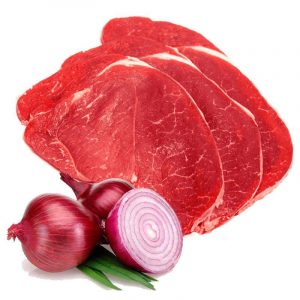


The translation trap
A British shopper who sees ternera on a label expects pale, milk-fed veal and wonders why the meat is so red. A Spanish shopper expects ordinary beef. The Spaniard is right. In everyday use ternera is simply the word for young beef, and most Spanish shops apply it loosely to añojo. The same goes for menus: a filete de ternera is a thin beef steak, not a veal escalope, and a guiso de ternera is a beef stew.
The legal ladder, from calf to bull
The law is stricter than the shop signs. Royal Decree 1698/2003 names beef by age and, for older animals, by sex.
| Word on the label | Legal definition | What a British shopper would call it |
|---|---|---|
| Ternera blanca | Up to 8 months | Veal, in the white-veal sense |
| Ternera | 8–12 months | Between veal and beef; rosé veal is the nearest idea |
| Añojo | 12–24 months | Yearling beef: young beef, and what “ternera” usually means in a Spanish shop |
| Novillo / novilla | 24–48 months | Beef, from a young adult male or female |
| Cebón | Castrated male under 48 months | Steer beef |
| Buey | Castrated male over 48 months | Ox |
| Vaca | Female over 48 months | Mature cow, old cow beef |
| Toro | Male over 48 months | Bull beef |
What yearling beef tastes like
Mild, tender and pale red. It has less depth than beef from an older animal and more tenderness, which is why it is Spain’s everyday meat: quick to fry and forgiving in a stew. If you want the opposite, dark meat with yellow fat and a deep flavour, that is old cow beef, the other end of the ladder.
Which of our cuts are yearling
Ten of them, all retinto, the native red breed of south-west Spain. For the grill: the chuletón, the loin, the whole fillet, the skirt steak (entraña) and the short ribs (churrasco). For the pot: ox cheek (carrillada) and diced beef. For the frying pan: the thin steaks. For roasting and slicing: the whole topside (tapa) of approx. 4.5 kg and the whole rump (cadera) of approx. 5.5 kg, both described with the other roasting joints. Those two are large pieces: plan to portion them on arrival and freeze what you will not use that week.
How to cook yearling beef
- Thin steaks: a very hot pan, a little olive oil, about a minute on each side. Salt at the end. Any longer and they dry out.
- Yearling chuletón and loin steaks: sear hard, then medium-rare, 54–57 °C (129–135 °F) at the core, or medium, 60–63 °C (140–145 °F), if you prefer. Rest five to ten minutes.
- Fillet: a lean cut, so keep it rare, 50–52 °C (122–126 °F), to medium-rare.
- Skirt: strong heat, a short time, sliced across the grain.
- Ox cheek and diced beef: brown well, then braise for 3–4 hours in a low oven, 140–160 °C (285–320 °F).

Ternera and añojo questions
Is ternera veal?
Usually not. By law ternera is an animal of 8–12 months, but most shops use the word loosely for añojo, which is yearling beef of 12–24 months. White veal is ternera blanca, up to 8 months.
What does añojo mean?
Yearling: an animal of 12–24 months. The meat is mild, tender and pale red.
Do you sell white veal?
No, we are afraid not. The youngest and mildest beef we sell is retinto yearling.
Does ox cheek come from an ox?
No, despite the name. Ox cheek is the British name for the cut, carrillada in Spanish. Ours is retinto yearling.
Why are the whole joints so big?
Because they are sold whole, not as pre-cut portions. They are vacuum-packed and can be portioned and frozen on arrival.