
Grand reopening, now taking pre-orders: 20% off everything until Wednesday 4 November, 17:00
Order now and secure your cuts. The first orders ship on Wednesday 4 November with SEUR Frío (refrigerated courier) and arrive the next day (Balearic Islands: two days).
On orders over €129: free delivery and a free tray of 4 criollo sausages.
Ribeye · rib of beef · cube roll
Ribeye steak in Spain: what to ask for and where to buy it
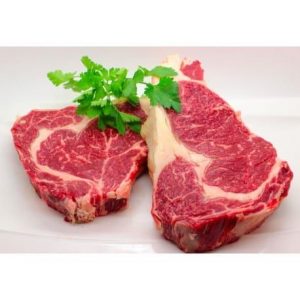
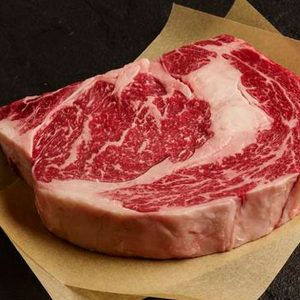
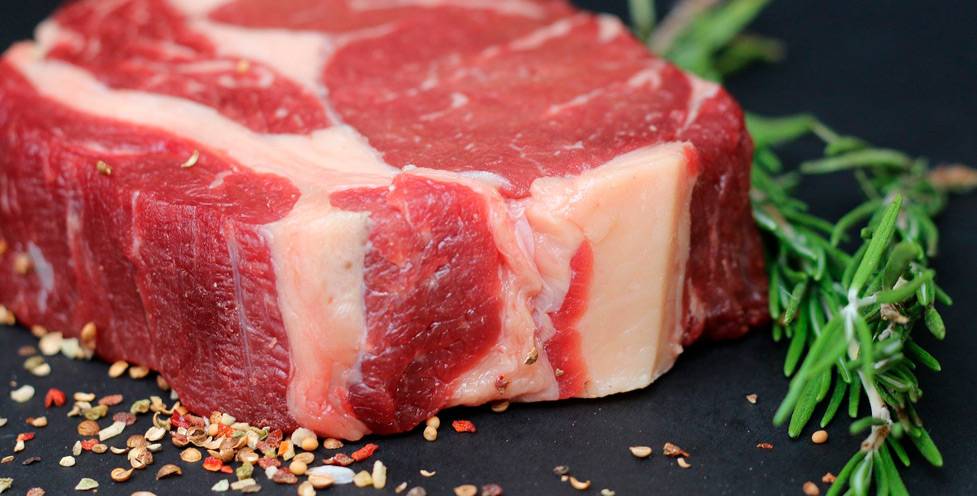
If you have just arrived and are wondering why nobody at the counter reacts to the word ribeye, here is the word they are waiting for. Ribeye in Spanish is lomo alto, the rib end of the loin. Cut as a boneless steak it is sold as entrecot; left on the bone and cut thick it becomes a chuletón, the steak version of a British rib of beef (US: prime rib). We sell boneless ribeye by weight, entrecot in packs of two and chuletón on the bone, all vacuum-packed and delivered chilled.
See the ribeye cuts All beef cuts in Spanish
- Retinto beef from the province of Cádiz, plus Black Angus and South American ribeye
- Sent chilled with SEUR Frío on Wednesdays, delivered Thursday before 13:00 on the Spanish mainland
- Card payment through Stripe with 3-D Secure

Ribeye, entrecot and chuletón to order
The entrecot packs hold two boneless loin steaks each: retinto mature cow at €34.90 for 650 g, or Black Angus at €36.90 for 675 g. The ribeye proper, listed as cube roll or ojo de bife, is South American beef sold by weight. The chuletón, our best seller, is one bone-in steak of approx. 1 kg from retinto mature cow; the whole bone-in loin of retinto cow goes by weight. We reopen on Thursday 5 November 2026; pre-orders up to Wednesday 4 November get 20% off in the basket (US: cart).
2 retinto cow entrecôte steaks, 650 g
2 entrecots de vaca retinta, 650 g34,90€ VAT incl.Add to basketRibeye (cube roll), South American beef
cube roll u ojo de bife - Sudamérica Price range: 41,80€ through 58,30€ VAT incl.Choose weightWhole bone-in loin, retinto cow
Lomo de vaca retinta Price range: 52,90€ through 59,41€ VAT incl.Choose weightChuletón (bone-in rib steak), retinto cow, approx. 1 kg
Chuletón de vaca retinta, 1 kg aprox.63,90€ VAT incl.Add to basket

One muscle, several Spanish names
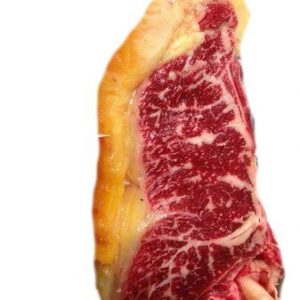
Spanish butchers split the loin in two. The half nearer the shoulder is the lomo alto, the ribeye. The half nearer the rump is the lomo bajo, the British sirloin (US: striploin or New York strip). After that, the name depends on whether the bone stays on and how thick the steak is cut.
| What the label says | What you get |
|---|---|
| Entrecot de lomo alto | A boneless steak from the rib end of the loin: a true ribeye steak. |
| Entrecot, with no further detail | A boneless loin steak, from the lomo alto or the lomo bajo. Ask which. |
| Ojo de bife or cube roll | Boneless ribeye under its South American and trade names. Ours is sold by weight. |
| Chuletón | A thick bone-in rib steak, usually 1 kg or more, from a mature animal and meant for sharing. |
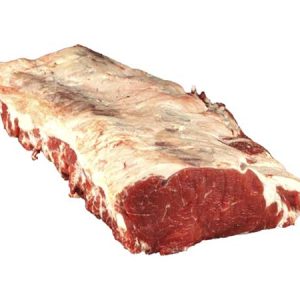
| Lomo alto entero | The rib end of the loin in one piece, to roast or to cut into your own steaks. |
Entrecot needs a follow-up question
In Spain, entrecot means a boneless steak from the loin, and that is all it means. It can come from the rib end or from the sirloin end, and the label does not always say. If you want the ribeye end, add the words “de lomo alto” at the counter. With our two-steak packs, or the whole bone-in loin, write to us on WhatsApp before you order and ask what the current pieces are.
Which animal is it from
Most Spanish shops sell añojo, yearling beef of 12 to 24 months, and loosely call it ternera: mild, tender, pale red. Vaca is mature cow, over 48 months: darker meat, yellow fat and a deep flavour. It is what our retinto entrecot and chuletón are. Retinto is a native breed of south-west Spain, raised outdoors on the dehesa, the open oak pastureland. Ours comes from the province of Cádiz.
Cooking a ribeye steak
- Take the steaks out of the fridge and the vacuum pack well ahead, and pat them dry.
- Salt them, then use a heavy pan or a barbecue (US: grill) that is properly hot.
- Go by core temperature: rare 50–52 °C (122–126 °F), medium-rare 54–57 °C (129–135 °F), medium 60–63 °C (140–145 °F).
- Rest the steaks for a few minutes on a warm plate before cutting.
- A 1 kg steak on the bone is a different job: see the chuletón and tomahawk pages.
Ribeye in Spain: common questions
What is ribeye called in Spanish?
Lomo alto. As a boneless steak it is sold as entrecot, ideally labelled entrecot de lomo alto, and as a thick bone-in steak it is a chuletón. On South American beef you will also see ojo de bife.
Is entrecot the same thing as ribeye?
Sometimes. Entrecot is any boneless steak from the loin, so it can be ribeye (lomo alto) or sirloin (lomo bajo). If you care which, ask.
How do I ask for a rib of beef for roasting?
A British rib of beef or fore rib, the American prime rib, is lomo alto with the bone left on. Ask for it in one piece and say how many ribs you want. Cut into thick single steaks, the same piece becomes chuletón.
What do vaca, añojo and buey mean on a label?
They are legal age names. Añojo is 12 to 24 months, novillo 24 to 48 months, vaca a female over 48 months and buey an ox, a castrated male over 48 months, which is rare and expensive.
Can I freeze the steaks when they arrive?
Yes, with no trouble at all. The meat is vacuum-packed and keeps in the fridge until the use-by date on the label, or it can be frozen on arrival.