
Grand reopening, now taking pre-orders: 20% off everything until Wednesday 4 November, 17:00
Order now and secure your cuts. The first orders ship on Wednesday 4 November with SEUR Frío (refrigerated courier) and arrive the next day (Balearic Islands: two days).
On orders over €129: free delivery and a free tray of 4 criollo sausages.
Dry-aged · Madurado +30 días · Mature cow loin · Retinto and Angus
Dry-Aged Beef in Spain: Two Mature Cow Loins Aged 30+ Days
If you are used to seeing “dry-aged” on every steakhouse board and are wondering what the Spanish label says instead, here is the short answer. We sell two dry-aged loins online in Spain, both from mature cow and both named madurado +30 días, aged 30+ days: a retinto cow loin without the fillet, and an Angus cow loin. Each is sold by weight, with the options on its product page, and travels chilled. At a Spanish counter, the words to look for are carne madurada or lomo madurado.
See the aged loins Old cow beef explained
- Two loins aged 30+ days; nothing else here is called dry-aged
- Mature cow, retinto or Angus
- Vacuum-packed, delivered chilled on Thursday before 13:00 on the Spanish mainland

The two aged loins
The first is retinto, the native red breed of south-west Spain, from the province of Cádiz; this loin is sold without the fillet (US: tenderloin). The second is Angus cow. Both are sold by weight, so choose the size on the product page. The shop reopens on Thursday 5 November 2026, and pre-orders until 4 November carry 20% off in the basket.
Retinto cow loin, dry-aged 30+ days (without fillet)
Lomo de vaca retinta madurado sin solomillo + 30 días Price range: 52,90€ through 54,90€ VAT incl.Choose weightAngus cow loin, dry-aged 30+ days
Lomo de vaca Angus Madurado +30 días Price range: 55,90€ through 57,90€ VAT incl.Choose weight

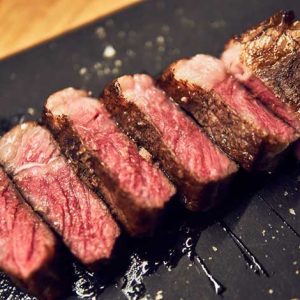
Mature cow without the ageing
The same retinto cow, not aged: the chuletón of approx. 1 kg, our best seller at €63.90; two entrecôte steaks, 650 g, at €34.90; and the T-bone, sold by weight. If you have never eaten mature cow, start here and come back to the aged loin later.
Chuletón (bone-in rib steak), retinto cow, approx. 1 kg
Chuletón de vaca retinta, 1 kg aprox.63,90€ VAT incl.Add to basket2 retinto cow entrecôte steaks, 650 g
2 entrecots de vaca retinta, 650 g34,90€ VAT incl.Add to basketT-bone steak, retinto cow
T-Bone Vaca Retinta Price range: 42,90€ through 49,90€ VAT incl.Choose weight

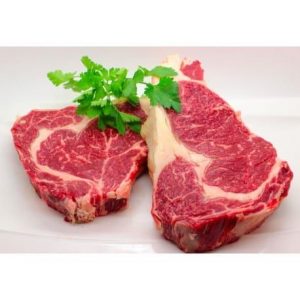

What dry ageing does to a loin
Dry ageing means keeping a large piece of beef uncovered in cold, moving air for weeks. Two things happen. The meat’s own enzymes slowly break down the muscle fibres, so it becomes more tender. And moisture leaves the meat, which concentrates the flavour: deeper, nuttier, with a savoury edge that some people compare to cheese. The outside dries into a dark crust, which is trimmed away before the meat is cut. Lost water and trimmed crust are the reason aged beef costs more per kilo than the same cut fresh.
Loins are the usual choice because they are large, protected by bone and fat, and made for the grill. Small cuts cannot be dry-aged in this way; they would simply dry out.
Mature cow plus ageing: the Spanish grill-house combination
Britain and America mostly age young beef. The classic Spanish grill house starts with an older animal: vaca, a female over 48 months, whose meat is already darker, with yellow fat and a deep flavour. Ageing is then laid on top. The result is the Spanish steak at its most intense, and it is not for everyone on the first try. The animal itself is described on our old cow beef page.
| Option | What it is | Who it suits |
|---|---|---|
| Retinto cow loin, aged 30+ days, without fillet | The loin of a mature retinto cow, fillet removed, sold by weight. With no fillet attached, steaks cut from it are rib and sirloin steaks, not T-bones. | Anyone who wants the full Spanish version: native breed, mature animal, ageing |
| Angus cow loin, aged 30+ days | The loin of a mature Angus cow, sold by weight | Anyone who knows Black Angus and wants to try it mature and aged |
| Not aged: retinto cow chuletón, entrecôte or T-bone | Mature cow, cut fresh | A first taste of old cow, or anyone who finds aged flavours too strong |
A word we use sparingly
Any beef kept in a vacuum bag goes on tenderising a little with time, which is sometimes called wet ageing. It is not the same thing: without air there is no moisture loss, no crust and no concentrated flavour. We use dry-aged only for the two loins whose names say madurado. Our other cuts, including the chuletones and the T-bone, are not aged and are not described that way.
How to cook an aged loin steak
- If your piece arrives whole, cut steaks at least two fingers thick. Thin steaks waste what the ageing has done.
- Take the meat out of its pack an hour ahead and pat it dry.
- Aged beef has less moisture on the surface and browns faster than fresh. Use a very hot barbecue (US: grill) or heavy pan, and watch the crust.
- Cook it rare, 50–52 °C (122–126 °F) at the core, or medium-rare, 54–57 °C (129–135 °F). Beyond medium, 60–63 °C (140–145 °F), the point of the ageing is lost.
- Rest it five to ten minutes on a warm board.
- Coarse salt, sliced across the grain, and no sauce.

Dry-aged beef questions
What does madurado mean?
Matured, or aged. On a Spanish label, carne madurada is aged beef, and “+30 días” means more than 30 days.
How long are your loins aged?
30+ days: that is what the product names say, and it is all we state.
Is all your beef dry-aged?
No, and we would rather say so plainly. Only two products are: the retinto cow loin without fillet and the Angus cow loin. Nothing else in the shop is described as aged.
Does the retinto aged loin include the fillet?
No, and it is worth knowing before you order. It is sold without the fillet. We sell whole fillets separately.
Can I freeze aged beef?
Yes, you can. It arrives vacuum-packed and chilled; it keeps in the fridge until the use-by date on the label, or you can freeze it on arrival.