
Grand reopening, now taking pre-orders: 20% off everything until Wednesday 4 November, 17:00
Order now and secure your cuts. The first orders ship on Wednesday 4 November with SEUR Frío (refrigerated courier) and arrive the next day (Balearic Islands: two days).
On orders from €129: free delivery to mainland Spain and a free tray of 4 criollo sausages.
Rubia Gallega · A breed, not a seal · Loin, chuletón and tomahawk
Rubia Gallega Beef in Spain: What the Name Means and What We Have in Stock
If you read about this breed long before you ever set foot in a Spanish grill house, you are not alone, so here is what it is and what we actually have. Rubia Gallega (literally “Galician blond”) is a cattle breed: large-framed blond animals, best known abroad as the old cow behind thick Spanish grill steaks. It is a breed name, not a cut and not a quality seal. To be straight with you: this page sells the bone-in cow loin in English. The chuletón (aged 30 days), the 30-day dry-aged entrecôte, the 1.7 kg tomahawk (aged 30 to 45 days) and the fillet (not matured) are in stock too, for now on Spanish product pages. It is a small supply and some weeks a cut runs out.
See the loin in stock Old cow beef explained
- Bone-in cow loin here; chuletón, entrecôte and tomahawk on the Spanish pages
- Breed name only; no protected indication claimed
- Vacuum-packed; pre-orders delivered chilled on Thursday 5 November before 13:00 on the Spanish mainland

The Rubia Gallega cut with an English page: a bone-in cow loin
A loin on the bone, lomo con hueso, from a Rubia Gallega cow, listed at €53.90. The Spanish listing does not state the weight of the piece or whether that figure is per kilo, so check the Spanish product page or ask us on WhatsApp before you order. You cut the steaks yourself.
Rubia Gallega cow loin, bone-in, aged 30 to 45 days
Lomo con hueso de vaca rubia gallega madurado de 30 a 45 días53,90€ VAT incl.Add to basket

From our own region: retinto mature cow
If what you want is a Spanish old cow steak on the bone, this is where most of our range is. The chuletón of retinto mature cow, approx. 1 kg, is our best seller at €63.90. Next to it: two entrecôte steaks (650 g), and the T-bone and the whole bone-in loin, both sold by weight.
Chuletón (bone-in rib steak), retinto cow, aged 30 to 45 days, approx. 1 kg
Chuletón de vaca retinta madurado de 30 a 45 días, 1 kg aprox.63,90€ VAT incl. (€63.90/kg)Add to basket2 retinto cow entrecôte steaks, aged 30 to 45 days, 650 g
2 entrecots de vaca retinta madurados de 30 a 45 días, 650 g34,90€ VAT incl. (€53.69/kg)Add to basketWhole bone-in loin, retinto cow, aged 30 to 45 days
Lomo entero de vaca retinta madurado de 30 a 45 días Price range: 52,90€ through 59,41€ VAT incl.Choose weight

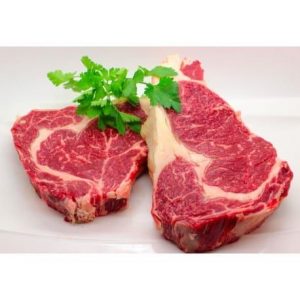

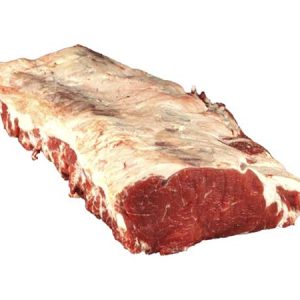
A breed name, and nothing more than that
Rubia Gallega names the breed of the animal, the way Angus does. By itself it says nothing about where an animal was raised, how old it was or what it ate. Most foreigners meet the name on a steakhouse menu and look for it once they live in Spain.
The breed versus the protected names
Galicia also has protected geographical indications for beef: registered names with their own rules and controls, which only certified meat may carry. We do not hold them, so we do not use them anywhere on this site, and we make no claim about where the animal behind our loin was raised. What we can tell you is what the label tells us: loin, cow, Rubia Gallega breed, bone in, aged 30 to 45 days.
| On the label | What it tells you | What it does not tell you |
|---|---|---|
| Lomo | The loin: the back muscle that gives rib and sirloin steaks | The weight of the piece (not in the listing) |
| de vaca | A female over 48 months (Royal Decree 1698/2003) | The exact age |
| Rubia Gallega | The breed | Where the animal was raised; it is not a geographical indication |
| c/h (con hueso) | Bone-in | How many ribs the piece has |
Why people want it as old cow
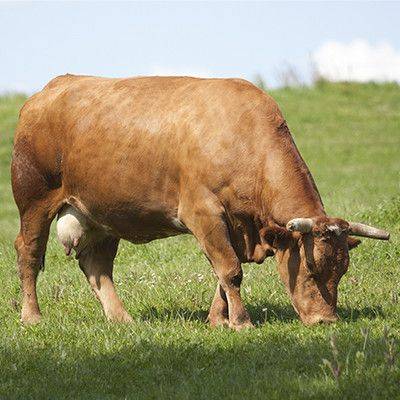
Spain’s best-known steak comes from vaca, a female over 48 months, often sold as vaca vieja: darker meat, yellow fat, deep flavour. Rubia Gallega cattle are large-framed, and as mature cows they are prized for exactly this kind of steak: a thick chuletón for the grill, shared in the middle of the table. We give no figures for age or fat, because the label gives none; the one figure it does give is the ageing, 30 to 45 days. The category itself is covered on our old cow beef page.
The alternative from our own region: retinto
Retinto is the native breed of south-west Spain, Andalusia and Extremadura, named after its deep red coat and raised outdoors on the dehesa (open oak pastureland). Ours comes from the province of Cádiz. It is a different breed, and we will not pretend otherwise. What the two share is the category: mature cow, with the darker meat and yellow fat that go with it.
Cooking a bone-in cow loin
- Portion it cold. Follow the gap between the ribs and cut one steak per rib; the whole loin guide has the steps.
- Take a steak out an hour ahead. Get the barbecue (US: grill) or a heavy pan very hot and salt with coarse salt as the meat goes on.
- Sear both faces dark, then the fat edge. Serve it rare, 50–52 °C (122–126 °F), or medium-rare, 54–57 °C (129–135 °F).
- Rest it five to ten minutes, cut the meat from the bone and slice it across the grain.
Rubia Gallega questions
Do you sell a Rubia Gallega chuletón or entrecôte?
Yes, we do. The chuletón, aged 30 days, a 30-day dry-aged entrecôte of 350 g, a 1.7 kg tomahawk aged 30 to 45 days and the fillet, which we do not mature, are listed on the Spanish Rubia Gallega page. The piece with an English product page is the bone-in loin, the joint chuletones are cut from.
Is Cachena the same as Rubia Gallega?
No. Cachena is a different Galician breed. The chuletón, entrecôte, tomahawk and fillet on our Spanish Rubia Gallega page are all Rubia Gallega.
Is Rubia Gallega the same as the protected beef names from Galicia?
No, and the difference matters. One is a breed; the others are protected geographical indications with their own certification. We sell by the breed name only.
Where was the animal raised?
This page makes no statement about that, because the breed name does not settle it. If it matters to you, ask us on WhatsApp before ordering.
Is the loin dry-aged?
It is aged: its Spanish name now gives 30 to 45 days (madurado de 30 a 45 días). The name gives the days but not the method, so we call it aged rather than dry-aged. The loins we sell as dry-aged are on the dry-aged beef page.
How heavy is the loin?
The Spanish listing does not say. Write to us on WhatsApp and we will tell you what the current pieces weigh. For planning, allow 400–500 g per person on the bone.