
Grand reopening, now taking pre-orders: 20% off everything until Wednesday 4 November, 17:00
Order now and secure your cuts. The first orders ship on Wednesday 4 November with SEUR Frío (refrigerated courier) and arrive the next day (Balearic Islands: two days).
On orders over €129: free delivery and a free tray of 4 criollo sausages.
Secreto ibérico · Where it sits · How to cook it
What Is Secreto Ibérico? Where It Sits on the Pig and How to Cook It
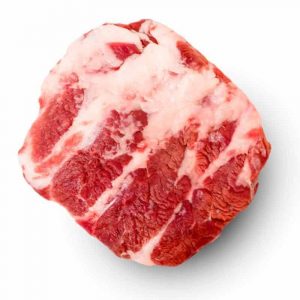
Secreto ibérico is a thin, heavily marbled cut of fresh Ibérico pork, hidden between the shoulder and the belly fat. It has no English name: secreto means “secret”, and that is the word to use at a Spanish counter. Cook it hot and fast, like skirt steak: two to four minutes a side on a very hot barbecue (US: grill) or a plancha, the Spanish flat griddle, then slice it across the grain.
- No English name: ask for secreto ibérico
- Hidden between the shoulder and the belly fat
- Two to four minutes a side; it may be served pink

Secreto pork in English: why there is no word for it
You will not find secreto on a British or American butcher’s chart: there the muscle is usually left inside larger cuts and sold as part of the shoulder or the belly. Spanish butchers lift it out and sell it on its own, because on an Ibérico pig it carries enough marbling to be cooked like a steak. If a menu in English offers “Iberian secret”, this is the cut.
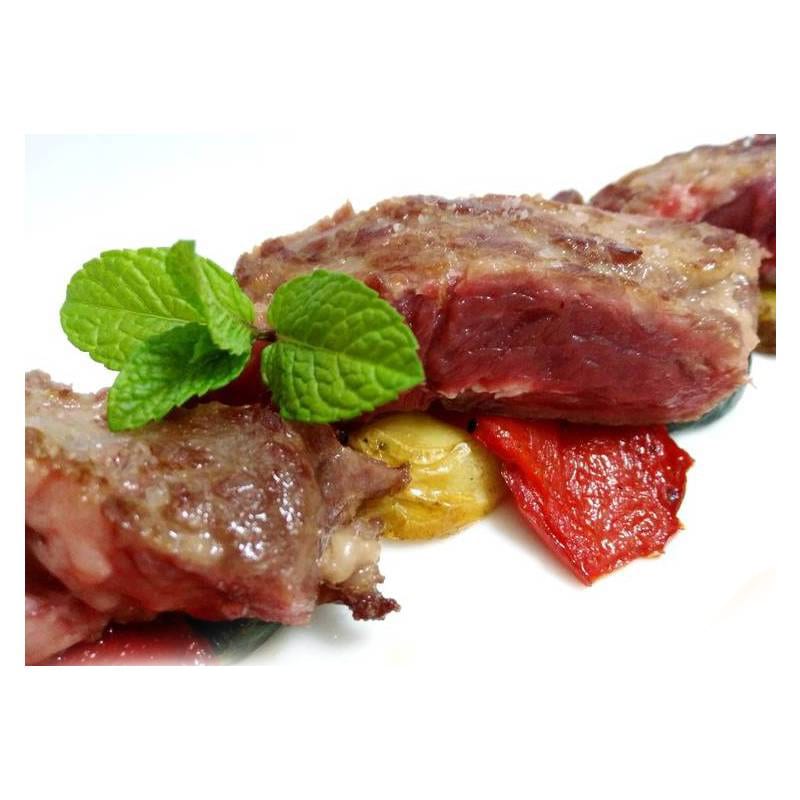
Where on the pig it sits
Picture a side of pork: the shoulder (paleta) at the front, the loin (lomo) along the back and the belly underneath, with its layer of fat, tocino in Spanish. The secreto lies between the shoulder and that fat, out of sight until the shoulder is lifted away, which is where the name comes from; another story has it that butchers once kept the cut for themselves. There is one on each side, so two per pig.
Raw, it is a thin, irregular sheet of meat streaked with fat. Do not trim it: the fat renders as it cooks and turns crisp at the edges.
Secreto and its neighbours
Secreto shares the counter with three other fresh Ibérico cuts, all sold under their Spanish names; the rest are on our Ibérico pork page.
| Cut | Where on the pig | What it is like | How to cook it |
|---|---|---|---|
| Secreto | Between the shoulder and the belly fat | Thin, heavily marbled, crisp at the edges once cooked | Very hot, two to four minutes a side |
| Presa | Oval muscle at the shoulder end, above the loin; two per pig | Thick; eats like a steak | Sear, then gentler heat to 60–63 °C (140–145 °F) at the core |
| Pluma | Small triangle at the front end of the loin | Tender and loose-grained | Hot and fast, whole, then slice |
| Abanico | Fan-shaped layer covering the ribs | Thin, streaked with fat | Very hot barbecue or plancha until the fat colours |

What to ask for at a Spanish counter
- “Secreto ibérico, por favor.” If a label says only secreto de cerdo (pork secreto), ask whether it is Ibérico.
- “De bellota” means the pig was finished on acorns in the dehesa, the open oak pastureland. Without those words, the label makes no claim about acorns.
- “Secreto de barriguera” (barriga means belly) is a different cut, sold on its own. A recipe that just says secreto means the classic one.
- How much: there is no bone, so allow 250–350 g per person as a main course, as for any boneless steak.
How to cook secreto ibérico
Secreto wants high heat and little time; its own fat does the job of oil or a marinade. The method is close to the one in our guide to grilling skirt steak.
- Take it out of the fridge 30 minutes ahead and pat it dry with kitchen paper (US: paper towels).
- Get a charcoal barbecue, a plancha or a heavy frying pan (US: skillet) properly hot. No oil. For the fire, see how to light a charcoal barbecue.
- Season with coarse salt, sal gruesa, just before it goes on or as it comes off. Salted in advance, it dries out; when to salt steak explains why.
- Cook it for two to four minutes a side, depending on thickness, until the outside is brown and crisp.
- Dripping fat causes flare-ups, so keep one side of the barbecue free of coals and move the meat there if the flames rise.
- Rest it for two or three minutes, then slice it across the grain into finger-wide strips.
How pink
Ibérico pork may be served pink, and in Spain secreto usually comes to the table with a trace of pink. It is too thin for a probe thermometer; on a thicker piece, 60–63 °C (140–145 °F) at the core gives a rosy centre. If you prefer pork cooked through, secreto takes it better than presa or the fillet (US: tenderloin): its fat keeps it juicy.
Secreto ibérico de bellota, delivered chilled
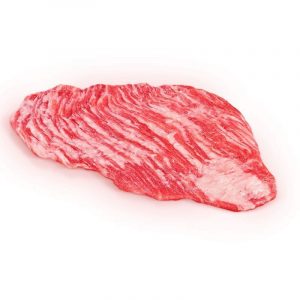
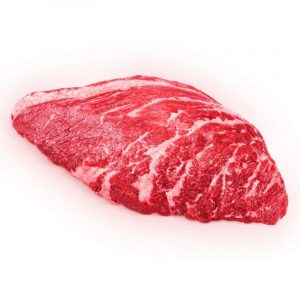
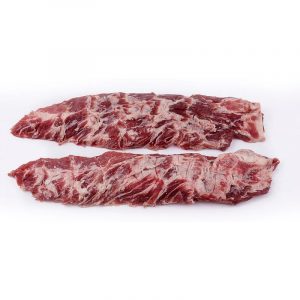
Our secreto ibérico de bellota comes in 800 g packs, vacuum-packed. Presa, pluma, abanico and the secreto de barriguera are below it if you want to compare, and secreto is also in two of our barbecue boxes.
Secreto ibérico de bellota, 800 g
Secreto de cerdo ibérico de bellota, 800 g37,90€ VAT incl.Add to basketPresa ibérica de bellota, 750 g
Presa de cerdo ibérico de bellota, 750 g37,90€ VAT incl.Add to basketPluma ibérica de bellota, 1 kg
Pluma de cerdo ibérico de bellota, 1 kg Price range: 42,90€ through 46,90€ VAT incl.Choose weightSecreto de barriguera (belly secreto), ibérico pork
Secreto Barriguera Price range: 19,14€ through 22,88€ VAT incl.Choose weight

Secreto questions
What is secreto ibérico in English?
There is no English name: secreto means “secret”, and menus in English sometimes say “Iberian secret”. It is a thin, marbled cut of fresh Ibérico pork, cooked hot and fast like a steak.
What part of the pig is secreto?
It lies between the shoulder and the belly fat, hidden until the shoulder is lifted away, one on each side of the pig.
How long do you cook secreto ibérico?
Two to four minutes a side on a very hot barbecue, plancha or heavy frying pan, with no oil, then rest it briefly and slice it across the grain.
Is secreto the same as presa or pork belly?
No. Presa is the thick oval muscle at the shoulder end, above the loin; secreto is thinner and fattier. Pork belly, panceta in Spanish, is the belly itself, a different cut.
Can I freeze secreto?
Yes. Ours arrives chilled and vacuum-packed: keep it in the fridge until the use-by date on the label, or freeze it on arrival. For questions before you order, write to us in English on WhatsApp at +34 695 34 63 29.