
Grand reopening, now taking pre-orders: 20% off everything until Wednesday 4 November, 17:00
Order now and secure your cuts. The first orders ship on Wednesday 4 November with SEUR Frío (refrigerated courier) and arrive the next day (Balearic Islands: two days).
On orders from €129: free delivery to mainland Spain and a free tray of 4 criollo sausages.
Roasting joints · Pot roast · What to say at the counter
Beef for the Oven in Spain: Which Cut to Roast and Which to Braise
For a roasting joint to carve into slices, ask a Spanish butcher for redondo (salmon cut; US: eye of round), tapa (topside; US: top round) or babilla (top rump; US: knuckle), and say “en una pieza, para asar” (in one piece, for roasting). For a pink roast beef, ask for lomo bajo (sirloin; US: striploin). For pot roast, choose aguja (chuck), morcillo (shin; US: shank) or pecho (brisket), cooked slowly, covered.
- Lean joints: a moderate oven, out at the right core temperature
- Working cuts: a low oven, covered, for hours
- Ask for the piece whole, or it may be sliced into filetes

Match the cut to the heat
A lean joint left in for hours comes out dry; a shin of beef roasted fast at 200 °C (390 °F) comes out tough. The cut decides the method.
- Lean cuts (redondo, tapa, babilla, the loin) have little collagen to melt. Cook them to a core temperature and take them out.
- Working muscles (morcillo, carrillada, aguja, pecho) are full of collagen, which needs hours above 70 °C (158 °F) to turn into gelatine. An ox cheek is still tough at 45 minutes and spoon-tender at three hours.

Start from the dish you have in mind
Other cuts are in our guide to beef cuts in Spanish.
| You want | Ask for | Oven | Rough time |
|---|---|---|---|
| A Sunday roast to carve into slices | redondo, tapa, babilla, tapilla | 160 °C (320 °F) | 45–55 min per kg, then check the core |
| Roast beef, pink from edge to edge | lomo bajo, or lomo alto, in one piece | Sear, then 130 °C (265 °F) | Until 52 °C (126 °F) in the centre |
| A pot roast that pulls apart | aguja, morcillo, carrillada | 140 °C (285 °F), covered, with stock or wine | 3–4 hours |
| Shin on the bone in plenty of sauce | ossobuco | 150 °C (300 °F), covered with liquid | About 3 hours |
Roasting joints: what to ask for
Redondo, the salmon cut, is narrow and even, so it carves neatly. Being lean, it overcooks easily: take it out at 60 °C (140 °F) in the centre at the latest. Tapa, topside, is just as lean: same limit, and carve it thin across the grain. Babilla has more flavour than redondo. Contra, silverside (US: bottom round), is firmer and does well as a pot roast. Tapilla, the rump cap (US: picanha), goes in fat side up so the melting fat bastes it: ask for it “con su grasa“.
Roast beef, the pink kind
In Spain, roast beef (or rosbif) usually means lomo bajo roasted pink and carved thin: sear it, then follow the second row of the table. A rib of beef on the bone (US: prime rib) is lomo alto con hueso, in one piece. Careful with US recipes: a US sirloin is cadera here (UK rump).
Pot roast and slow braises: the working cuts
These economical cuts do better in a slow oven than many expensive ones.
- Aguja (chuck, sold in the UK as braising steak). The all-rounder for a long, slow oven.
- Morcillo or jarrete (shin; US: shank). Cut across the bone, it becomes ossobuco, and the marrow is half the pleasure. Cover it with red wine, stock or both.
- Pecho (brisket), which some shops label aleta. Braise it in one piece, fat side up; a whole brisket takes longer.
- Carrillada (ox cheek; US: beef cheek). The method is in how to cook ox cheek.
Say “en una pieza, para guisar” (in one piece, for braising), or you may get diced carne para guisar. Diced beef and oxtail are on our stewing beef page.
Yearling or mature cow?
What Spanish shops loosely call ternera is usually añojo, yearling beef of 12–24 months: mild, tender and pale red. Vaca, cow over 48 months, is darker, with yellow fat and a deeper flavour. Age shows more in a roast than in a braise: spend on the first, save on the second.

Before it goes in, and after it comes out
- Take the chill off: out of the fridge an hour ahead, two for a large joint, so the outside does not overcook.
- Brown it first in a very hot pan. It does not seal in the juices, but the crust gives a roast most of its flavour.
- Preheat for a good 15 minutes and use a probe thermometer: rare 50–52 °C (122–126 °F), medium-rare 54–57 °C (129–135 °F), medium 60–63 °C (140–145 °F). More in our doneness guide.
- Rest it 10–20 minutes, loosely covered: see resting meat.
Joints for the oven, tied or whole
The tied redondo (approx. 1.5 kg) goes straight in. The babilla (approx. 4.5 kg) and the bone-in retinto cow loin (by weight) are whole pieces to portion and freeze; the brisket (approx. 4 kg) and shin (approx. 2.5 kg) are for the slow oven.
Eye of round roasting joint, tied, retinto, approx. 1.5 kg
Redondo de retinto atado para asar, 1,5 kg aprox.41,90€ VAT incl. (€27.93/kg)Add to basketThick flank / top rump (babilla), whole retinto yearling joint, approx. 4.5 kg
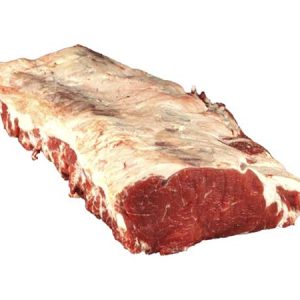
Babilla de Añojo Retinto, pieza 4,5 kg aprox.121,90€ VAT incl. (€27.09/kg)Add to basketWhole bone-in loin, retinto cow, aged 30 to 45 days
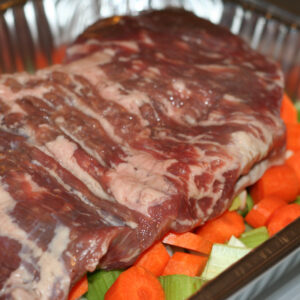
Lomo entero de vaca retinta madurado de 30 a 45 días Price range: 52,90€ through 59,41€ VAT incl.Choose weightWhole beef brisket (pecho), retinto, approx. 4 kg
Pecho de retinto entero (brisket), 4 kg aprox.84,90€ VAT incl. (€21.23/kg)Add to basketShin of beef (jarrete / morcillo), whole retinto joint, approx. 2.5 kg
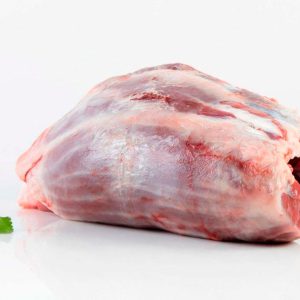
Jarrete de Vacuno Retinto — Morcillo, Garrón o Brazuelo Premium. Pieza completa de 2,5 kg aprox.57,90€ VAT incl. (€23.16/kg)Add to basket


Oven questions, briefly answered
What is a roast beef joint called in Spanish?
There is no single word. Name the cut and add “en una pieza, para asar”: redondo, tapa or babilla. The borrowed name roast beef, or rosbif, usually means lomo bajo roasted pink.
Which cut should I buy for roasting in Spain?
Redondo, tapa, babilla or tapilla to carve into slices; lomo bajo to serve pink; a working cut, covered, for meat that falls apart.
What beef should I buy for pot roast in Spain?
Aguja (chuck), morcillo (shin) or pecho (brisket, also labelled aleta), in one piece. Brown it, add stock or wine, cover and give it three to four hours at 140 °C (285 °F); a whole brisket takes longer.
How long per kilo should I roast beef?
At 160 °C (320 °F), 45–55 minutes per kilo for a lean joint, as a starting point. A narrow redondo cooks faster than a thick block of tapa: let the probe decide.