
Grand reopening, now taking pre-orders: 20% off everything until Wednesday 4 November, 17:00
Order now and secure your cuts. The first orders ship on Wednesday 4 November with SEUR Frío (refrigerated courier) and arrive the next day (Balearic Islands: two days).
On orders over €129: free delivery and a free tray of 4 criollo sausages.
Coarse salt · Thick or thin · Pepper last
When to Salt Steak: Before or After Cooking?
Salt a steak either at the moment it goes on the heat or well in advance: 40 minutes to 12 hours ahead for anything thicker than 3 cm. The stretch in between is the one that fails, because the surface is wet and the steak stews when it should sear. Use coarse salt, more than feels sensible, and keep the pepper until the end.
- Right before, or at least 40 minutes before; never in between
- Thick cuts early, thin cuts as they go on
- Coarse salt for cooking, flakes for the sliced meat, pepper at the end
The oldest argument at the barbecue has a simple answer
Before, during or after: everybody has a firm view. The answer depends on two things only, the thickness of the cut and how much time you have. To see why, follow what happens to a salted steak on the worktop.
What salt does, minute by minute
- At once. Salt starts drawing water out of the surface by osmosis.
- The first minutes. That water sits on the outside and the steak looks as if it is sweating. Put it on the fire like this and it will not sear; it boils in its own moisture.
- From about 40 minutes. The brine that formed on the surface goes back into the meat and takes the salt with it, seasoning the steak inside as well as out. The surface dries again and is ready to take a crust.
Hence the rule: salt just before, or salt well ahead. What does not work is the middle ground.
The practical rule, cut by cut
The Spanish names are the ones on the label or at the counter; the full list is in our guide to beef cuts in Spanish.
| Cut | When to salt | Why |
|---|---|---|
| Chuletón (thick bone-in rib steak), tomahawk, a whole loin: anything over 3 cm | 40 minutes to 12 hours before | There is time for the brine to go back in and season the inside |
| Entrecot (boneless loin steak), filete (thin frying steak), entraña (skirt): 1–3 cm | As it goes on the heat | There is no thickness to season; the salt only needs to be in the crust |
| Burgers and mince (US: ground beef) | On the outside only, as they go on | Salt mixed into the mince binds the protein and the burger turns rubbery |
| Ibérico pork: secreto, presa, pluma | Just before, or as it comes off | The fat already seasons the meat; salted in advance it dries out |
For a chuletón the timing takes care of itself. The steak needs an hour out of the fridge before it goes on the fire, and that hour is exactly what the salt needs too, so salt it when you take it out. The rest of the method is in how to grill a chuletón. If you do not have the hour, salt it as it goes on and ignore every timing in between. The secreto, presa and pluma in the last row are explained on our Ibérico pork page.
Which salt: three words on a Spanish shelf
- Sal gruesa, coarse salt. The one for the grill. It stays on the surface, melts slowly and builds a crust.
- Sal en escamas, flaky sea salt of the Maldon kind. Keep it for the end, scattered over the meat once it is sliced. There it earns its place, because it crunches.
- Sal fina, fine table salt. It dissolves instantly and you oversalt without noticing. Leave it for the pasta water.
How much salt
More than you think. A 1 kg steak takes a scant handful of coarse salt spread over both sides: about 10 g. It looks like far too much and it is not, because most of it falls off on the grill and what stays on barely seasons the inside.
Salt both faces and the edge of fat as well. The fat is where it is needed most.
And the pepper
Pepper burns. At the temperature of a hot charcoal fire it turns bitter and masks the flavour of the beef. Add it as the steak comes off the heat, freshly ground, never before. If you want it in the crust, grind it coarse and accept that some of it will scorch.
Salt is one decision out of three
A well-salted steak can still be spoiled at the other end. Take it off at the right core temperature, 52 °C (126 °F) for medium-rare, as set out in our doneness guide, and rest it before slicing. The flaky salt goes on after that, over the cut faces, where you can taste it.
One of each kind: thick, thin and whole
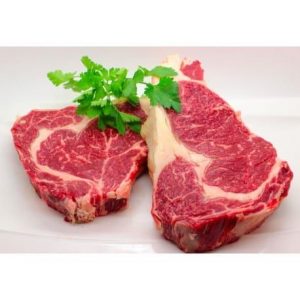
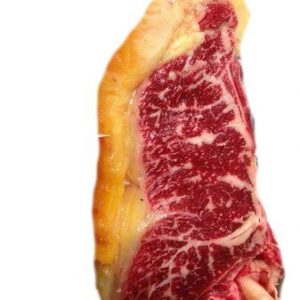
A mature cow chuletón to salt an hour ahead, two-steak packs of entrecôte from retinto cow or Black Angus to salt as they hit the pan, and a whole yearling fillet (US: tenderloin), thick enough to be salted early like any large piece.
Chuletón (bone-in rib steak), retinto cow, approx. 1 kg
Chuletón Vaca Retinta - MAS VENDIDO57,90€ VAT incl.Add to basket2 retinto cow entrecôte steaks, 650 g
2 Entrecot Vaca Retinta 650 gr (Más vendido)30,90€ VAT incl.Add to basketWhole fillet (tenderloin), retinto yearling beef
Solomillo de añojo retinto Price range: 47,90€ through 50,50€ VAT incl.Choose weight


Salting questions
Should I salt steak before or after cooking?
Before. Thin steaks of 1–3 cm as they go on the heat; thick cuts over 3 cm from 40 minutes to 12 hours ahead. After cooking, the only salt worth adding is a pinch of flaky salt over the sliced meat.
Does salting in advance dry the steak out?
Only if you cook it too soon. In the first minutes the salt pulls water to the surface; given 40 minutes or more, that brine goes back into the meat and seasons it. Cooking it in the wet stage in between is what goes wrong.
Can I salt a steak the night before?
Yes, if it is thick. A chuletón, a tomahawk or a whole loin can be salted up to 12 hours ahead. Do not do it with thin steaks or with Ibérico pork.
What is sal gruesa?
Coarse salt, the one for the grill. Sal en escamas is flaky salt for finishing and sal fina is fine table salt, which dissolves too quickly for a steak.
When does the pepper go on?
As the steak comes off the heat, freshly ground. Over a hot fire pepper burns and turns bitter.