
Grand reopening, now taking pre-orders: 20% off everything until Wednesday 4 November, 17:00
Order now and secure your cuts. The first orders ship on Wednesday 4 November with SEUR Frío (refrigerated courier) and arrive the next day (Balearic Islands: two days).
On orders from €129: free delivery to mainland Spain and a free tray of 4 criollo sausages.
Sunday roast · Tapa and contra · Minutes per kilo · Resting
Sunday Roast Beef in Spain: Which Joint to Buy and How Long to Roast It
For a Sunday roast in Spain, ask for tapa (topside; US: top round) or contra (silverside; US: bottom round) in one piece; rib of beef (US: prime rib) is lomo alto con hueso. Roast it at 220 °C (430 °F) for 20 minutes, then turn the oven down to 160 °C (320 °F) and allow about 30–35 minutes per kg for pink. Rest it for 15–20 minutes before carving.
- Topside is tapa, silverside is contra, rib of beef is lomo alto con hueso
- Minutes per kilo get you close; a probe thermometer decides
- Take it out 3–5 °C (5–9 °F) early and rest it 15–20 minutes

What to ask for at a Spanish counter
The joints (US: roasts) are all here, just cut differently: Spanish butchers usually slice topside and silverside into thin frying steaks (filetes) and rib of beef into thick bone-in steaks (chuletones). Ask for the piece whole and give a weight: “un trozo de tapa de kilo y medio, en una pieza, para asar” (a kilo and a half of topside in one piece, for roasting). If you want it tied, add “atado, por favor“. Rosbif is the dish, not a cut; the cut names are all in our guide to beef cuts in Spanish.
| British joint | Ask for | How it roasts |
|---|---|---|
| Topside (US: top round) | tapa | Lean and fairly tender: the everyday roast. Keep it pink. |
| Silverside (US: bottom round) | contra | Lean, firmer, coarser grain. Keep it pink and carve thin, or pot-roast it. |
| Salmon cut (US: eye of round) | redondo | A neat cylinder, so it cooks evenly and carves into tidy rounds. |
| Top rump, thick flank (US: knuckle, sirloin tip) | babilla | Roasts like topside. Several muscles, so tie it firmly. |
| Rib of beef (US: prime rib) | lomo alto con hueso | Marbled, so it bastes itself; the bones act as a rack. |
Our topside is yearling (añojo, 12–24 months) retinto, a native red breed of south-west Spain: mild, tender and pale red. The bone-in retinto loin for a rib roast is mature cow (vaca) over 48 months: darker, with yellow fat and a deeper flavour.

Roast beef cooking time per kg, in Celsius
Take the joint out of the fridge an hour ahead, pat it dry and salt it. Give it 20 minutes at 220 °C (430 °F), then 160 °C (320 °F) for the minutes per kilo below. If you brown it in a hot pan first, skip the hot start.
| You want | In Spanish | Minutes per kg at 160 °C (320 °F) | Take it out at | After resting |
|---|---|---|---|---|
| Rare | Poco hecho | 25–30 | 47 °C (117 °F) | 50–52 °C (122–126 °F) |
| Medium-rare, pink | Al punto | 30–35 | 52 °C (126 °F) | 54–57 °C (129–135 °F) |
| Medium | Hecho | 35–40 | 57 °C (135 °F) | 60–63 °C (140–145 °F) |
So a 1.5 kg topside for pink takes 20 minutes at 220 °C plus about 50 at 160 °C: about 70 minutes in all. Use the lower figure for a fan oven (US: convection oven; horno con ventilador) or a slim redondo, and the higher one for a conventional oven or a squat block of tapa.
Shape matters as much as weight, and a rib weighed with its bones throws the sums out, so let a probe thermometer (termómetro de cocina) in the centre, clear of any bone, have the last word; start checking 15 minutes early. The full scale is in our doneness guide.
Silverside, slowly
For a table that likes its beef well done, pot-roast the silverside: lean joints roasted dry to well done turn tough. Brown it all over, put it in a casserole (US: Dutch oven) with onion, carrot, red wine and some stock (caldo), cover and leave it at around 150 °C (300 °F) for about three hours for 1.5–2 kg.
Resting and carving
Lift the joint onto a warm board, cover it loosely with foil and leave it for 15–20 minutes: the centre climbs another 3–5 °C (5–9 °F) and less juice runs out when you carve. Use the time for the Yorkshire puddings and the gravy: spoon most of the fat out of the roasting tin (US: roasting pan), add wine and stock, scrape up the browned bits and let it bubble. More on resting meat.
Carve thin, across the grain. With a rib, cut the meat off the bones in one piece, then slice it.

Buying a whole joint
Our topside (approx. 4.5 kg), silverside (approx. 7.5 kg) and top rump (approx. 4.5 kg) come whole. Cut them into joints of about 1.5 kg, tie each with kitchen string (US: butcher’s twine; hilo de cocina) every 3 cm and freeze the ones you will not roast that weekend; thaw in the fridge for 24–48 hours. The tied redondo needs none of this.
Joints for the oven
A tied redondo (eye of round) of approx. 1.5 kg for one Sunday, whole leg joints to portion, and the whole bone-in retinto cow loin, sold by weight, for a rib roast. All chilled and vacuum-packed; the full range is on our roast beef joints page.
Eye of round roasting joint, tied, retinto, approx. 1.5 kg
Redondo de retinto atado para asar, 1,5 kg aprox.41,90€ VAT incl. (€27.93/kg)Add to basketTopside (tapa), whole retinto yearling joint, approx. 4.5 kg
Tapa o Nalga de Adentro de Añojo Retinto, pieza completa de 4,5 kg aprox.121,90€ VAT incl. (€27.09/kg)Add to basketSilverside (contra), whole retinto joint, approx. 7.5 kg
Contra de Retinto, pieza completa 7,5 kg aprox202,90€ VAT incl. (€27.05/kg)Add to basketThick flank / top rump (babilla), whole retinto yearling joint, approx. 4.5 kg
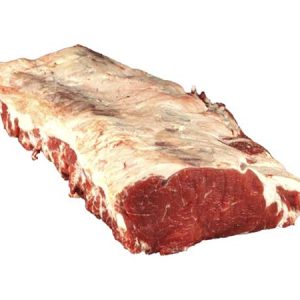
Babilla de Añojo Retinto, pieza 4,5 kg aprox.121,90€ VAT incl. (€27.09/kg)Add to basketWhole bone-in loin, retinto cow, aged 30 to 45 days
Lomo entero de vaca retinta madurado de 30 a 45 días Price range: 52,90€ through 59,41€ VAT incl.Choose weight


Sunday roast questions
What is topside called in Spanish?
Tapa (US: top round). Ask for “tapa en una pieza, para asar” with a weight, or it may well be sliced into filetes.
What is silverside called in Spanish?
Contra (US: bottom round). The salmon cut along it is often sold separately as redondo. Ours is fresh, not salted: for roasting or pot-roasting, not for salt beef (US: corned beef).
How long do I roast beef per kg in °C?
After 20 minutes at 220 °C (430 °F), allow 25–30 minutes per kg at 160 °C (320 °F) for rare, 30–35 for medium-rare and 35–40 for medium. Start checking with a probe thermometer 15 minutes early.
What do I ask for if I want rib of beef?
Lomo alto con hueso, en una pieza, with the number of ribs or a weight. Ask whether it is yearling (añojo) or mature cow (vaca): the cow is darker, with a deeper flavour.