
Grand reopening, now taking pre-orders: 20% off everything until Wednesday 4 November, 17:00
Order now and secure your cuts. The first orders ship on Wednesday 4 November with SEUR Frío (refrigerated courier) and arrive the next day (Balearic Islands: two days).
On orders from €129: free delivery to mainland Spain and a free tray of 4 criollo sausages.
Rump cap · Picaña · Oven · Barbecue · Steaks
How to Cook Picanha: Whole on the Barbecue, in the Oven or as Steaks
Cook picanha, the rump cap (US: coulotte), with its fat on. Brown the fat first, then roast the whole piece fat side up at 180 °C (355 °F) in the oven, or over indirect heat on a barbecue (US: grill) with the lid down, and take it off at 52 °C (126 °F) for medium-rare. For steaks, cut it with the grain about 3 cm thick, sear hard and slice across the grain to serve.
- Fat cap scored, never trimmed
- Fat side down to brown it, up for the long cooking
- Raw steaks are cut with the grain; cooked meat is sliced across it

The cut, and what to call it in Spain
Picanha is the triangular muscle on top of the rump, cadera in Spain, under a thick cap of fat that bastes the meat as it cooks. At a Spanish counter, ask for picaña or tapilla and add con su grasa, “with its fat”, so nobody trims it off. If you cooked picanha back home, only the Spanish words are new.

Before it goes on: dry, score and salt
- An hour ahead, take it out of the fridge and the vacuum pack and pat it dry with kitchen paper (US: paper towels).
- Trim only the silver skin, the thin shiny membrane on the lean side.
- Score the fat in a criss-cross, lines about 2 cm apart, without cutting into the meat.
- Salt generously with coarse salt, sal gruesa: a whole piece as it comes out of the fridge, steaks as they go on the heat. When to salt steak gives the reason.
Fat side up or down?
Both, in this order. Down first, five to eight minutes in a heavy frying pan (US: skillet) over medium heat, or over the coals, until the fat is golden; pour off what collects. Up for the long cooking, so the melting fat runs through the meat. Down again at the end for a minute, only if the fat is still pale.
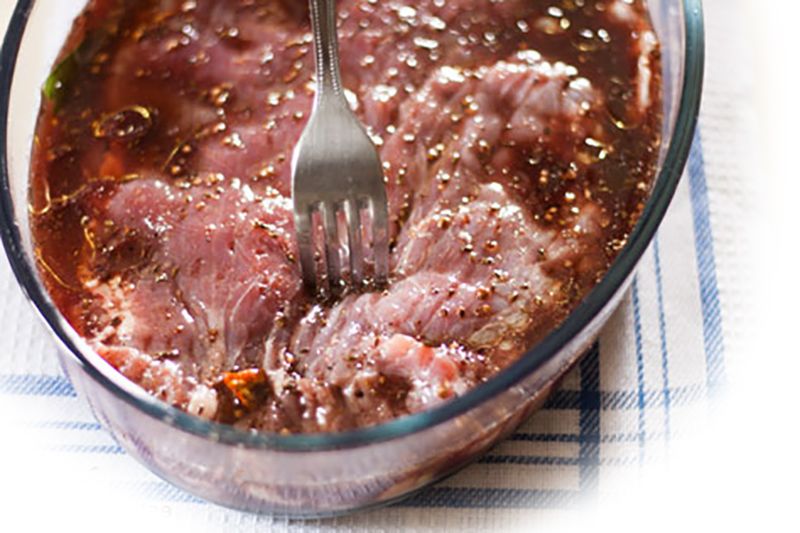
Three ways to cook it
| Method | Heat | Fat side | Rough timing |
|---|---|---|---|
| Whole, in the oven | 180 °C (355 °F), top and bottom heat | Down in the pan, then up | 30–50 minutes |
| Whole, on the barbecue | Medium, indirect, lid down | Down over the coals, then up | 45–60 minutes |
| Steaks, about 3 cm thick | High, direct | Cut faces, then the fat edge | 3–4 minutes a side |
Whole-piece timings assume 1.5–2 kg; the thermometer decides. For medium-rare, all three come off at 52 °C (126 °F).
Whole, in the oven
Set the browned picanha fat side up on a rack in a roasting tin (US: roasting pan). On a Spanish oven, choose calor arriba y abajo, top and bottom heat; with the fan, con ventilador, it cooks faster, so check from 25 minutes. For an even pink, roast at 110–120 °C (230–250 °F) until the core reads about 48 °C (118 °F), then crisp the fat in a very hot pan.
Whole, on the barbecue
Build a two-zone fire, coals on one side only, and wait for white ash, as in how to light a charcoal barbecue; on gas, leave one side off. Brown the fat over the coals, then move the piece to the cool side, fat up, and close the lid. Start probing after 35 minutes.
As steaks
Cook the salted steaks over direct high heat, turning once, then stand each on its fat edge for a minute. If dripping fat makes the coals flare, move the steak aside; never pour water on them. In a frying pan, their own fat is all the oil you need.
How to cut picanha: with the grain, then across it
The grain is the line of the fibres on the lean side; the two cuts run opposite ways.
- Raw, into steaks: with the grain. Cut parallel to the fibres, about 3 cm thick, so each steak keeps a strip of fat. It feels wrong; the second cut puts it right.
- Cooked, to serve: across the grain. Slice steaks or the whole roast at right angles to the fibres, about 1 cm thick, so every bite is tender. Spanish recipes call this cortar en contra de la fibra.
Where the fibres change direction, turn the knife with them.

Core temperature and resting
Medium-rare, al punto on a Spanish menu, is 54–57 °C (129–135 °F). The core rises 3–5 °C (5–9 °F) after the meat leaves the heat, so it comes off at 52 °C (126 °F). The full scale is in our steak doneness guide.
Rest a whole picanha for ten minutes under loose foil and steaks for five before carving; resting meat explains why.
A whole picanha, and what to cook alongside it
Ours is a whole picanha of 1.5–2 kg, 100% retinto beef, with its fat cap on: roast it whole, or cut steaks on arrival and freeze what you will not cook soon. Flank (vacío), skirt (entraña) and criollo sausages share the fire well. Questions: write to us in English on WhatsApp, +34 695 34 63 29.
Whole picanha (rump cap), 100% retinto, 1.5–2 kg
Picanha 100% Retinto, pieza completa 1,5 a 2 kg59,90€ VAT incl. (€29.95/kg)Add to basketSkirt steak (entraña), retinto yearling beef, 1.5 kg
Entraña Añojo Retinto 1,5 KG44,90€ VAT incl. (€29.93/kg)Add to basketCriollo sausages (chorizo criollo), 600 g
Chorizo Criollo 600 gr13,90€ VAT incl. (€23.17/kg)Contains processed meat: ask us for the allergen listView product
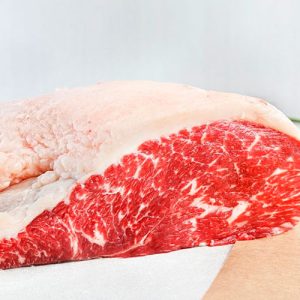


Picanha cooking questions
What oven temperature should I use for picanha?
180 °C (355 °F), fat side up, after browning the fat: 30–50 minutes for 1.5–2 kg. For an even pink, 110–120 °C (230–250 °F).
Do you cook picanha fat side up or down?
Down first to brown it, then up for the long cooking, so the melting fat bastes the meat.
How do you cut picanha?
Raw, into steaks with the grain, about 3 cm thick. Cooked, across the grain in slices about 1 cm thick.
How long does a whole picanha take on the barbecue?
About 45–60 minutes for 1.5–2 kg over indirect heat, lid down, plus ten minutes of rest.
What core temperature should picanha reach?
Take it off at 52 °C (126 °F) for medium-rare; resting brings it to 54–57 °C (129–135 °F). For medium (60–63 °C, 140–145 °F), take it off at about 57 °C (135 °F).