
Grand reopening, now taking pre-orders: 20% off everything until Wednesday 4 November, 17:00
Order now and secure your cuts. The first orders ship on Wednesday 4 November with SEUR Frío (refrigerated courier) and arrive the next day (Balearic Islands: two days).
On orders over €129: free delivery and a free tray of 4 criollo sausages.
Spanish meat labels · Origin · Dates · Age names
How to Read a Spanish Meat Label, Line by Line
A Spanish beef label tells you where the animal was born (nacido en), reared (criado en or cebado en), slaughtered (sacrificado en) and cut up (despiezado en), and its sales name gives the animal’s age and sex. The date is the line that matters most: fecha de caducidad is a use-by date, consumo preferente is best before. Fresh meat carries a fecha de caducidad.
- Fecha de caducidad is use by: a safety date, not a suggestion
- Nacido, criado, sacrificado, despiezado: born, reared, slaughtered, cut
- Ternera on a label is not British veal
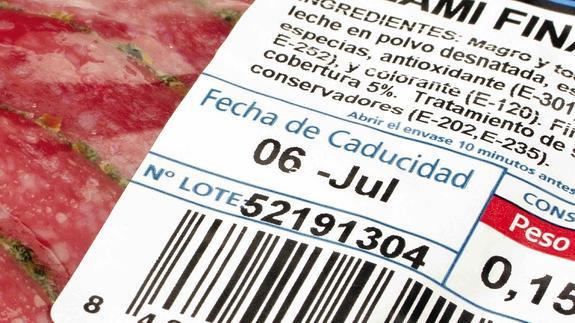
The label, line by line
Three sets of rules meet on a pack of Spanish beef. The EU beef labelling rules (Regulation (EC) No 1760/2000) make the origin lines mandatory. Spanish Royal Decree 1698/2003 adds the sales name by age and sex. General food labelling (Regulation (EU) No 1169/2011) covers the rest: name, weight, batch, storage, operator and date.
| On the label | What it means | What to check |
|---|---|---|
| Denominación, for example “chuletón de vaca” | The name of the food. On beef it includes the sales name by age and sex | The word after the cut: añojo, vaca and buey are three different meats |
| A reference number or code | The link between the meat and the animal or batch it came from | That it is there: it is mandatory on beef |
| Nacido en | Born in | The country |
| Criado en or Cebado en | Reared in, or fattened in | The country; it may not be the country of birth |
| Sacrificado en | Slaughtered in, with the slaughterhouse approval number | Country and number |
| Despiezado en | Cut in, with the cutting plant approval number | Country and number |
| Origen: España | The short form, allowed when the animal was born, reared and slaughtered in one country | It replaces the three separate lines |
| Peso neto | Net weight | Kilos or grams; with a bone-in cut the bone is part of it |
| Lote | Batch | Quote it if you ever query a pack |
| Conservar entre 0 y 4 ºC | Storage conditions: keep between 0 and 4 °C (32–39 °F) | That your fridge really is that cold |
| Fecha de caducidad | Use by | That it is caducidad and not consumo preferente. See the next section |
| A company name and address | The food business operator responsible for the pack | Who stands behind it |
| An oval with ES, a number and CE | The oval health mark: ES, an establishment number and CE | The number identifies the establishment |
| €/kg and importe | On shop price labels: the price per kilo and the price of that pack | Compare shops by €/kg, not by the pack price |
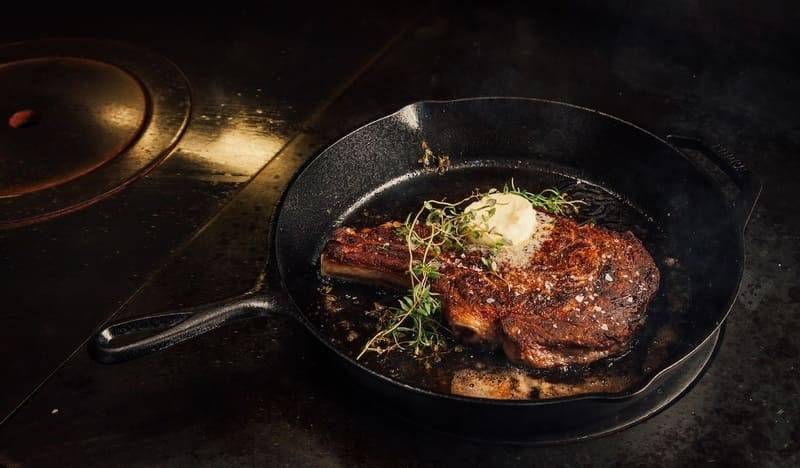
The date trap: caducidad is not consumo preferente
Spanish labels use two kinds of date.
- Fecha de caducidad is “use by”. It is a safety date: do not eat the food after it.
- Consumo preferente is “best before”. It is a quality date.
Fresh meat carries a fecha de caducidad, so treat it as you would a British use-by date. Our vacuum-packed meat keeps in the fridge until the use-by date on its label, or you can freeze it on arrival. One more word belongs here: descongelado means the product has been defrosted, and defrosted meat must not be refrozen.
The age-name trap: ternera is not veal
The sales name on Spanish beef is fixed by law according to the animal’s age and sex.
| Sales name | Legal definition | What to expect |
|---|---|---|
| ternera blanca | Up to 8 months | White veal |
| ternera | 8 to 12 months | Young beef; shops also use the word loosely for añojo |
| añojo | 12 to 24 months | Yearling beef: mild, tender, pale red |
| novillo, novilla | 24 to 48 months | Young male, young female |
| cebón | Castrated male under 48 months | Not an ox yet |
| buey | Castrated male over 48 months | Real ox: rare and expensive |
| vaca | Female over 48 months | Mature cow: darker meat, yellow fat, deep flavour |
| toro | Male over 48 months | Bull |
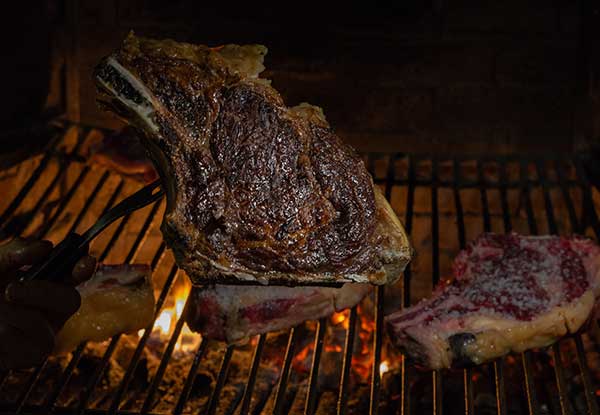
The dictionary translates ternera as veal, and that is the trap. What most Spanish shops loosely call ternera is añojo, yearling beef. At the other end, vaca on a label is not a warning: old cow beef is the meat behind the famous Spanish chuletón. And a label that says buey must mean a castrated male over 48 months; see the ox page.
Other words worth knowing
- Envasado al vacío: vacuum-packed.
- Congelado: frozen.
- Madurado: aged.
- De bellota: on ibérico pork, acorn-finished.
- Sin hueso / con hueso: boneless / on the bone.
The names of the cuts themselves, from solomillo to morcillo, are translated in our guide to beef cuts in Spanish.
Four labels to practise on
The same cut at three legal ages, chuletón of vaca, of añojo and of buey, and a secreto ibérico de bellota for the pork vocabulary. Our own labels are in Spanish, like the basket and the order e-mails, so this guide applies to every parcel we send.
Chuletón (bone-in rib steak), retinto cow, approx. 1 kg
Chuletón de vaca retinta, 1 kg aprox.63,90€ VAT incl.Add to basketChuletón (bone-in rib steak), retinto yearling beef, approx. 1 kg
Chuletón Añojo Retinto36,90€ VAT incl.Add to basketOx chuletón (buey), native retinto breed, 1 kg
Chuletón de Buey Retinto – Raza Autóctona 1 kg99,90€ VAT incl.Add to basketSecreto ibérico de bellota, 800 g
Secreto de cerdo ibérico de bellota, 800 g37,90€ VAT incl.Add to basket


Label questions
What is the difference between fecha de caducidad and consumo preferente?
Fecha de caducidad is a use-by date: a safety date, and the food should not be eaten after it. Consumo preferente is a best-before date, which is about quality. Fresh meat carries a fecha de caducidad.
What do nacido en, criado en and sacrificado en mean?
Born in, reared in and slaughtered in. They are mandatory on beef under EU rules, together with despiezado en (cut in) and a reference code linking the meat to the animal or batch. Cebado en, fattened in, can replace criado en.
What does “Origen: España” mean on beef?
That the animal was born, reared and slaughtered in Spain. When all three happened in one country the label may give that single line in place of the three separate ones.
Can I refreeze meat labelled descongelado?
No. Descongelado means the product has already been defrosted, and it must not be refrozen. Our chilled, vacuum-packed cuts are a different case: they can be frozen on arrival.